
Ephraim and Asenath’s Inherited Bond
The Thing on the DoorstepThis thread follows the unsettling father-daughter relationship between Ephraim Waite and Asenath Waite, as parental teaching and apparent inheritance become, in Edward’s account, a concealed act of possession.
increasing Bearing strength in each event
 decreasing
Bearing strength in each eventdecreasingA Daughter Raised in Secrecy

A Daughter Raised in Secrecy
An Isolated Family History
Asenath is described as Ephraim Waite’s daughter, born late in his life to a mother whose identity and appearance remain obscure. She grows up associated with an old, decaying house in Innsmouth and with the atmosphere of secrecy surrounding her father’s occult studies.
Ephraim’s reputation precedes Asenath into the world. Stories about his strange powers and remote household make her family background a source of suspicion, while his reputation as a magician gives her early access to unusual knowledge.
A Father’s Influence
Asenath becomes an avid pupil of Ephraim’s interests, and observers later remark that she can resemble him in expression. Their bond is therefore presented through inheritance and instruction, not through a reassuring account of ordinary family affection.
The secrecy of her upbringing matters because it leaves her with few independent relationships through which others might understand her. Her father’s shadow will remain a powerful explanation for her abilities and, later, for the terrifying identity Edward believes is hidden within her.
The Father’s Lessons

The Father’s Lessons
Occult Knowledge at School
At the Hall School, Asenath presents herself as a kind of magician and appears able to perform baffling feats. She claims influence over storms, displays strange knowledge, and unnerves other students with her unusual behavior.
Her schoolmates also experience what they understand as her hypnotic influence. Some feel as though their personalities have been exchanged, imagining that they look across the room from within Asenath’s body at their own bodies.
A Desired Identity
Asenath speaks about consciousness as something that may exist independently of the physical frame. She also resents that she is not a man, believing that a male brain could exercise greater cosmic powers and surpass the mastery of her father.
The closeness between father and daughter is thus linked to emulation and ambition. Asenath’s abilities appear to continue Ephraim’s work, while her desire to exceed him hints that instruction may have produced not merely a family resemblance but an increasingly dangerous pursuit of power.
A Death Surrounded by Doubt
A Death Surrounded by Doubt
A Strange Ending
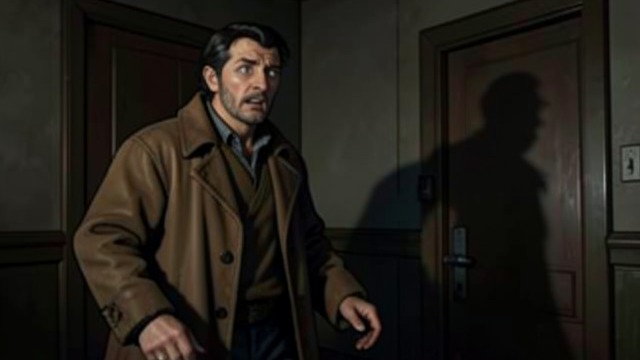
Ephraim dies insane under circumstances that remain suspicious to people who know the family. Rumors include the possibility of poison and a final period of madness in which he is confined in a padded attic room.
The reports place Asenath close to the circumstances of his decline, but they do not establish what occurred. The uncertainty means that her relationship with her father cannot be understood simply as that of a pupil mourning a dead teacher.
A Question of Identity
Years later, Edward asks whether Ephraim’s soul was the one locked away and wonders who might have been imprisoned in whose body. He suspects that the person called Asenath may actually be her father, transferred into her body before his death.
The suggestion transforms the family bond into a mystery of identity. Rather than ending at Ephraim’s death, the connection may have continued through a bodily exchange that allowed a father to inhabit his daughter and conceal himself behind her name.
The Father Reappears in the Wife

The Father Reappears in the Wife
Recognition in the Face
Edward tells Daniel that Asenath’s expressions and manner sometimes resemble Ephraim’s. He also points to her handwriting and speech as signs that an older identity emerges when she is off guard.
His interpretation makes the apparent father-daughter resemblance more than a family trait. He believes Ephraim used his daughter’s body as a means of surviving and that the person who married him was therefore not simply the woman he had met.
An Inherited Threat
In Edward’s account, Ephraim’s influence extends beyond teaching and imitation: it provides the model for taking another person’s body. Asenath’s attempt to occupy Edward’s body becomes an apparent repetition of what her father did to her.
The family bond consequently appears as a pattern passed from one generation to the next. The possibility that Asenath is both daughter and continuation of Ephraim makes Edward’s marriage feel like an encounter with a history already embedded in her identity.
A Legacy That Survives the Body

A Legacy That Survives the Body
The Family Pattern Continues
Edward’s final message says that Asenath’s influence continues after her death and that he has been displaced into her decaying body. Whether his explanation is complete or not, it presents Ephraim’s alleged method as a family legacy that has outlasted the original body.
The relationship between father and daughter is therefore tied to a broader fear that identity can persist and act after ordinary death. Ephraim’s supposed survival would have shaped Asenath, and her continuing power now threatens to shape Edward’s fate.
The Cost of Inheritance
Daniel responds by killing the figure at the sanitarium, but his act does not resolve the uncertainty about what can survive a body. He worries that the same force might continue elsewhere and insists that the body should be cremated.
The father-daughter connection ends not with a clear account of their feelings but with the consequences of the legacy Edward attributes to them. Their family history becomes an emotional bond expressed as inheritance, imitation, and a power that no intimate relationship can safely contain.
Before Asenath enters the Hall School
During Asenath’s school years
Shortly before Asenath enters the Hall School
After Edward begins describing the body exchanges
After Edward’s death at the sanitarium
